Australia West Papua Association (Sydney)
AWPA Update No 3- 18 April 2024
There was no improvement in the human rights situation in West Papua. Clashes continued between the TPNPB and the Indonesian security forces . The security forces cracked down on peaceful demonstrators arresting many.
A video posted to social media and picked up by the mainstream media shows Indonesian soldiers brutally beating a West Papuan man Definus Kogoya . The video shows Definus placed in a drum filled with water with both his hands tied. Definus is repeatedly punched and kicked by several soldiers. His back is also slashed with a knife. One can only imagine the fear and terror the Papuan man must feel at this brutal torture being inflicted on him. The video is so shocking many news outlets blocked its viewing or put the warning ‘graphic violent content” in their articles.

At first the military denied the claim. However, they eventually admitted it was true and arrested 13 soldiers involved in the incident. The torture video was condemned by civil society, church groups and human rights organisations around the world. AWPA also condemned the brutal torture committed by the Indonesian security forces
and wrote to the Australian Foreign Minister concerning the torture incident.
DFAT's reply to AWPA letter
An Al Jazeera English report on the incident.
Indonesia human rights :13 soldiers arrested after torture video
Army commanders in Indonesia have apologised to the people of the Papua region - after video emerged of an indigenous man being tortured. 13 soldiers were arrested and questioned. Army commanders say the man in the video was a member of an armed separatist group, who was planning to set fire to a health centre. Human rights groups say it’s the latest of many violations in Papua. Al Jazeera's Jessica Washington reports from Jakarta.
Video
Indonesia human rights :13 soldiers arrested after torture video
The Jakarta Post Editorial comment on the torture video
Stop fighting fire with fire
This time, we have a photographic evidence for the brutality, with videos on social media showing a Papuan man being tortured by a group of plainclothes men alleged to be the Indonesian Military (TNI) members. One clip shows the man's head being beaten with a rod, while another has his back slashed by a blade that looks like a combat knife.
Editorial Board (The Jakarta Post) Jakarta Wed, March 27, 2024
Indonesia It happens again and again; indigenous Papuans fall victim to Indonesian soldiers. This time, we have a photographic evidence for the brutality, with videos on social media showing a Papuan man being tortured by a group of plainclothes men alleged to be the Indonesian Military (TNI) members.
One clip shows the man's head being beaten with a rod, while another has his back slashed by a blade that looks like a combat knife. After initially denying the assailants in the footage were military personnel, the TNI issued on Monday a rare apology and said that 13 soldiers had been arrested following the viral video. “I apologize to all Papuans, and we will work to ensure this is never repeated,” said Cenderawasih Military Commander in Papua Maj. Gen. Izak Pangemanan. That rare apology is a positive sign, but it is not enough. We have had enough pledges from the military about not inflicting more violence on Papuans, but time and again blood is spilled in the name of the military and police campaign against armed separatist groups……………
https://www.thejakartapost.com/opinion/2024/03/27/stop-fighting-fire-with-fire.html
Clashes continued between the TPNPB and the Indonesian security forces, usually resulting in security force operations in the area of the military engagement. As a result of the attack on a police post in Paniai District by the TPNPB on the 20 March, the Papuan Police deployed 30 rangers from its elite Mobile Brigade (Brimob) to secure the post and hunt down the attackers. Two police officers died in the attack. The Paniai Police Chief said that the attack occurred while the officers were securing a helipad and that two AK-47 rifles belonging to the police were also seized by the TPNPB.
As more Papuans become aware of the horrific video, they responded by holding rallies and protests leading to more crackdowns on the peaceful demonstrators. AWPA also raised concerns about the possibility of a new military operation in the area of the attack on the police post.
On 2 April 2024, police officers arrested 62 protesters while gathering at the Sentani Road junction and temporarily detained than at Jayapura District Police Station. The previous day 15 activists had been arrested for simply handing out flyers about the coming protest on the 2 April.
Indonesian police disperse Papuan demonstrators at the gate of the Jayapura University of Science and Technology during the crackdown yesterday. Image: Jubi/Theo Kelen
West Papua Mini Film Festival
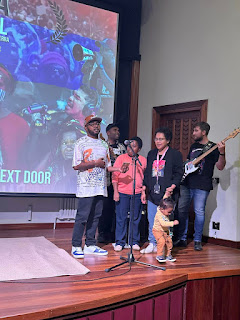
The West Papua Mini film festival is traveling around Australia raising awareness about the situation in one of our nearest neighbours. The film festival was launched by the West Papua Project at Wollongong University on the 9 April. The event at UOW also included the launch of a report about disinformation in West Papua. A joint report by JUBI and UOW. It will be put online later.
The Jubi Documentary films highlight the current situation in West Papua. There are ongoing clashes between the security forces and the TPNPB (the West Papuan National Liberation Army) resulting in security force operations creating thousands of internally displaced people. The film "My Name is Pengungsi" (Refugee) is an excellent background to the IDP situation in West Papua. As well as “My Name is Refugee” , the diverse mini festival included, Papua Hip-Hop 'When the Microphone is On' , The Black Pearl 'The Field Generals' , The Voice of Grime Valley , Pepera 1969, A Democratic Integration? and Strange Birds in Paradise (although films varied from event to event). Events at the various venues included panels, Q&A sessions with film markers involved and entertainment.
Photos of other showings so far
More videos of Kiwi hostage Philip Mehrtens in Papua warn against Indonesian military air strikes
RNZ Pacific 13 April
More videos appear to have been released by the West Papua Liberation Army showing Kiwi hostage Phillip Mehrtens.
The New Zealander was taken hostage more than a year ago on 7 February in Paro, Papua, while providing vital air links and supplies to remote communities.
In the recent videos he is seen surrounded by armed men and delivers a statement, saying his life is at risk because of air strikes conducted by the Indonesian military.
He asks Indonesia to cease airstrikes and for foreign governments to pressure Indonesia to not conduct any aerial bombardments.
RNZ has sought comment from the Ministry of Foreign Affairs and Trade.
Earlier this year Foreign Minister Winston Peters strongly urged those holding Mehrtens to release him immediately without harm.
Peters said his continued detention serves no-one's interests.
In the last year, a wide range of New Zealand government agencies has been working extensively with Indonesian authorities and others towards securing Mehrtens release.
The response, led by the Ministry of Foreign Affairs and Trade, has also been supporting his family.
TNI denies bombing Papua district in bid to free NZ pilot
The spokesman of the TNI's regional command in Papua has denied claims made by the TPNPB, the group that abducted New Zealand pilot Phillip Mehrtens, that the military had deployed News Desk (The Jakarta Post) Jakarta Mon, April 1, 2024
Responding to a claim by the separatist West National Liberation Army (TPNPB) that aerial bombing had occurred in an area where New Zealand pilot Philip Mehrtens was taken hostage, the Indonesian Military (TNI) said it had deployed only flyby operations in Nduga regency. Lt. Col. Candra Kurniawan, a spokesperson for the Cendrawasih Regional Military Command in Papua province, denied that any military operation involving aerial bombs had taken place. He underlined that soldiers from the Nduga District Military Command 1706 only carried out routine patrols in the region.
"This [patrol] was conducted together with the local community. There has been nothing like an air strike," Candra told Tempo on Saturday. He also rebuffed the TPNPB’s claim that TNI soldiers had engaged in a firefight with members of separatist group. "Many [TNI] members are in the field serving the community, the situation is also conducive," Candra added.
Earlier on March 30, TPNPB spokesperson Sebby Sambom said in a statement received by Tempo that the military had deployed aerial attacks using “military aircraft, helicopters and drones” and destroyed four of the group’s posts in Nduga.Sebby said the attacks took place between March 27 and 29, and that the latest attack involved a joint TNI-National Police operation dropping aerial bombs in the area where Mehrtens was being held. "The TNI authority has carried out a dangerous mission to free Capt. Phillip Mark Mehrtens in Nduga," he said, adding that although the TPNPB’s local post was destroyed, its troops and Mehrtens had both survived. The TPNPB, the armed wing of the Free Papua Movement (OPM) that is fighting for Papuan independence from Indonesia, kidnapped Susi Air pilot Mehrtens on Feb. 7, 2023 after he landed a small passenger plane at Paro Airport in the remote mountain region of Nduga. More than one year since his abduction kidnapping, very little is known about where the New Zealander is being held or under what conditions he is living.
Papua Rebel Leader Says Captured New Zealand Pilot Won’t Be Released
Jakarta Globe April 14, 2024 Meirto Tangkepayung
Jayapura. The leader of a separatist group in Papua has issued a video message declaring that he will not allow the release of New Zealand pilot Philip Mark Mehrtens, who has been held hostage for 14 months. Egianus Kogoya, sought by Indonesian authorities for alleged involvement in the killings of civilians and attacks on public facilities in Nduga Regency, conveyed in the video that the captured pilot will remain in his custody until death. “The pilot will remain with me until his demise; that’s our aim. The lives of the Papuan people are invaluable, but many Papuans have sacrificed their lives for the pilot. Therefore, I will not release him,” Egianus said in the video released on Sunday. Additionally, he accused the Indonesian Military of bombing residential areas and refugee camps in Papua without providing evidence. Mehrtens also makes an appearance in the video, appealing to authorities to refrain from conducting aerial attacks and using artillery on rebels. He was captured by rebels who attacked and set fire to a Susi Air small plane upon its landing in Nduga Regency on February 7 last year.
https://www.indoleft.org/news/2024-04-14/the-papuan-and-indonesian-peoples-fight-against-the-tnis-crimes-in-papua.html
The Papuan and Indonesian people's fight against the TNI’s crimes in Papua
Arah Juang – April 14, 2024
The Indonesian National Army's (TNI) crime of torturing civilians in Papua has attracted criticism and resistance from the ordinary people. Ranging from Jakarta to Papua, statements were made and demonstrations launched everywhere. The people condemned the TNI's inhumanity and brutal treatment of Alianus Murib, Warinus Murib and Definus Kogoya in the Puncak regency, Papua. The military, the police and reactionary civilian group, launched repression on the ground. Buzzers were also mobilised to spread hoaxes and black campaigns on social media.
On Friday March 29, the All-Papuan Student Executive Council (BEM) alliance and various other organisations in Jayapura launched a demonstration in front of the Cenderawasih University auditorium condemning the TNI's crimes. The crowd lined up in front of the auditorium and took turns giving speeches. The protesters made seven main demands, including demanding that the perpetrators be tried in court, the withdrawal of organic and non-organic troops from Papua and the right to self-determination for the Papuan people. The demonstrators also rejected the state's stigmatisation of civil society as members of the West Papua National Liberation Army-Free Papua Organisation (TPNPB-OPM) and demanded an end to criminalisation.
On Wednesday March 27, hundreds of demonstrators from the Papua University and High School Students Association, the Papuan Student Alliance (AMP) and the Indonesian People's Front for West Papua (FRI-WP) took to the streets and rallied at the Istana Plaza and Asia-Africa Merdeka building in the West Java provincial capital of Bandung. The protesters condemned the brutality of the TNI in Papua and urged President Joko "Jokowi" Widodo as supreme commander of the TNI to withdraw the military from Papua. The demonstrators said that the TNI's presence in Papua only perpetuates violence against civilians.
Meanwhile Papuans in Sorong city from the People's Solidarity Against Militarism and Concern for Human Rights in the Land of Papua also staged a demonstration on Thursday March 28. The action took place in front of Studio Elim with the main theme being "As if we are half-animals."
On Saturday March 30, protesters launched a demonstration in the Central Java city of Yogyakarta. The action started at the Kamasan 1 Papuan student dormitory on Jalan Kusumanegara and ended at the zero kilometre point in front of the central post office. The demonstrators took up the theme "The Land of Papua is Bleeding, Bring the Perpetrators of the Persecution of Papuans to Justice and Give the Right of Self-Determination as a Democratic Solution". A similar action was also held out in the Central Java provincial capital of Semarang.
On Wednesday March 27 the Greater Malang Papua High School and University Students Association (IPMAPA) also launched a mass action in Malang City, East Java. The action was joined by dozens of students carrying posters and chanting "Long live the Papuan people! Long live the Indonesian people!" The crowd made 27 demands, including criticising the Cenderwasih regional military commander Major General Izak Pangemanan, who spread the lie that the video depicting TNI torture of Papuan civilians in Puncak was the result of an edit. The crowd also called for Pangemanan to be removed from his post and that the Indonesian state immediately resolve cases of human rights violations in both Papua and Indonesia. On the same day an action was launched by Papuan students in the Southeast Sulawesi city of Kendari. The students took to the streets again on Saturday April 5. The action was attended by dozens of students carrying flags, banners and posters reading "Fighting Indonesian Colonial Crimes Against the People of the West Papuan Nation".
On Thursday March 28 the IPMAPA and the AMP took to the streets of Surabaya, the provincial capital of East Java. Spokesperson Merku Murib stated that the TNI's crimes in Papua and the inhumane treatment of the Papuan people has been happening since 1961. They therefore condemned this treatment and made 12 main demands, one of which was criticising the Cenderawasih military commander. During the action, the protesters were intimidated by a reactionary civil group called the Red-and-White Militia (LMP) but they held their ground and read out a statement. They then dispersed in a peaceful and orderly manner.
On Monday April 4, the Bali city AMP committee also launched a demonstration with the theme "Democracy and Human Rights in Papua are Suffocating". The protest began with speeches at 8.30 am. At 9.30 am they were confronted by the reactionary civilian group the Garuda Nusantara Patriots (PGN). The PGN attacked the crowd, punching demonstrators and throwing stones. Around 14 people were injured, and protest materials such as posters and banners were damaged. Meanwhile, the police stood by and allowed the PGN attack to continue.
On Tuesday April 2 in the South Sulawesi provincial capital of Makassar, the Papuan People's University and High School Student Forum of Concern (FSM-PRP) also launched an action. The protesters, who consisted of university students, high school students and other young people lunched the action to condemn the TNI's treatment of the Papuan civilians in Puncak and Papua as a whole. The action, which started at 2 pm, was immediately broke up police. Protesters were beaten, arrested and forced onto police trucks. According to a Makassar Legal Aid Foundation (LBH Makassar) report, the crowd was repressed three times and resulted in more than five people suffering lacerations to their heads.
Meanwhile in Jayapura, the Student and Papuan People's Anti-Militarism Front also launched an action on Tuesday. The crowd consisted of thousands of students, youth and other people's organisations. Crowds gathered at several different points including in Jayapura city and Jayapura Regency.
In a press release, action coordinators Ones Suhuniap and Philipus Robaha emphasised that the actions were peaceful and purely for humanity. The police however continued to carry out repression.
At 7 am, a crowd that had gathered in Sentani was forcibly dispersed and 62 people were arbitrarily detained. Meanwhile at the Waena 3 State Housing Company (Perumnas) police and soldiers attacked the crowd firing teargas and punching and kicking protesters. As a result, dozens were injured and one person fainted on the spot. At other gathering points, the police also launched repression. Those who remained then gathered in Abepura and read out a joint statement at 2 pm.
On Friday April 5, thousands of people from the People's Concern for Human Rights took to the streets of Nabire regency, Central Papua. The protesters gathered at several points bringing posters with the demand and theme "Papua is a Military Emergency for the Sake of Investment". In a press release, action coordinator Adhen Dimi said that military violence in Papua is an effort by the state to control the Papuan region for the sake of investment. Military actions killing and torturing the ordinary people of Papua is the practice of spreading terror in order to smooth the way for bourgeois capital in the land of Papua. For this reason, the people condemned the military's behaviour in Papua.
In response, the police and military launched a wave of indiscriminate repression. Protesters at various locations were faced with weapons and clubs. At the SP 1 and 2 intersections the police fired at protesters. Opinus Japugau had his left temple destroyed by a bullet and fell unconscious. Meanwhile protesters at other points were chased into the forest.
The police also raided residents' homes and vandalised a house belonging to Dogiyai Indonesian National Youth Committee (KNPI) chairperson Bernando Boma. Not only that, four journalists who were covering the action, Kristinaus Degei, Elias Douw, Melkianus Dogopia and Yulianus Degei, were pursued by the authorities, hit in the head and their cell phones destroyed in an effort to destroy evidence of their repression. Meanwhile the acting governor of Central Papua, Ribka Haluk, refused to meet with the protesters.
On Monday April 8 the Papuan Student Association in North Tapanuli, North Sumatra, also took to the streets. They called for organic and non-organic military to be withdrawn from Papua and for all the perpetrators of human rights violations to be tried. Previously in Manado, North Sulawesi, students also took to the streets on April 3.
In addition to these mass actions, criticisms of the TNI's crimes also came from different parties through statements, ranging from National Human Rights Commission (Komnas HAM), the Commission for Missing Persons and Victims of Violence (Kontras) and the University of Indonesia Student Executive Council (BEM UI). Specifically in the case of BEM UI, the state mobilised buzzers and attacked BEM social media accounts. This proves that the state's crimes in Papua are being protected and the state does not have the slightest intention of resolving them.
We must confront military violence in Papua, including all repression against the struggle by the ordinary people, by strengthening the unity of the people of Papua and Indonesia. Maintaining democracy, expanding it, including recognising the democratic rights of the Papuan people, is important for the people of Papua and in fact is in the interests of the Indonesian people as well. (mm) -- Arah Juang is the newspaper of the Socialist Union (PS).
[Translated by James Balowski. The original title of the article was "Perjuangan Rakyat Papua dan Indonesia Melawan Kejahatan Militer di Papua".]Source: https://www.arahjuang.com/2024/04/14/perjuangan-rakyat-papua-dan-indonesia-melawan-kejahatan-militer-di-papua/
UN rights panel concerned by extrajudicial killings in Indonesia's Papua
UPDATED MAR 28, 2024
GENEVA - The U.N. Human Rights Committee said on Thursday it was concerned by extrajudicial killings in Indonesia's Papua province, where separatists and Indonesian troops have been fighting for decades. "The Committee is concerned by multiple reports of extrajudicial killings and enforced disappearances of indigenous peoples in Papua, which have not been investigated despite the state party's commitment to do so," it said in a report. The Committee said it welcomed a Supreme Court decision to uphold the conviction of six law enforcement officers for the premeditated murder of four Papuan people in the city of Timika, but stressed there was a lack of information on other cases.
The Committee recommended that Indonesia promptly investigates "all human rights violations, including arbitrary detention, enforced disappearances, torture and ill-treatment, and extrajudicial killings..." It also called on Indonesia "to strengthen efforts to end impunity and hold perpetrators accountable for previous violations".
Resource-rich Papua, Indonesia's easternmost region, has experienced violence between armed separatists and troops since the former Dutch territory was brought under Indonesian control in a vote overseen by the United Nations in 1969.
The conflict has escalated significantly since 2018, with pro-independence fighters mounting deadlier and more frequent attacks. REUTERS
Child dies, another hurt as Indonesian forces, Papua rebels clash
Shot children were siblings taking cover inside their house after they heard gunfire
UCA News April 11 2024
The funeral of 12-year-old Ronaldo Duwitau was held on April 9, a day after he was killed in a gunfight between the Indonesian military and Papuan pro-independence groups. (Photo supplied)
A 12-year-old boy was killed, and his six-year-old sister seriously injured in a gunfight between Indonesian security forces and an armed rebel group in Christian-majority Papua province, drawing strong condemnations and demands for a thorough probe by rights groups.
Nepina Duwitau was reportedly in a coma and being treated at a hospital in Nabire while her brother, Ronaldo, was buried on April 9, a day after being shot in a residential area in Sugapa, Intan Jaya Regency, Central Papua Province.
Both the Cartenz Peace Operations Task Force, which oversees security in Papua, and the West Papua National Liberation Army (TPN-PB) denied involvement in shooting at the children. In a statement, the task force’s spokesman Bayu Suseno, said the incident took place after they arrested Bui Wonda, a member of the TPN-PB. The armed criminal group — as the military calls the TPN-PB — attempted to free Wonda by attacking and heavily damaging a military post near the Papua Bank in Sugapa. The two children were shot as a result of the attack, Suseno claimed.
However, TPN-PB spokesman Sebby Sambom told BBC Indonesia that they did not direct fire at civilians, accusing officers from the Cartenz Peace Task Force of injuring the two children. “TPN-PB cannot possibly shoot residents. TPN-PB will protect Papuans,” he claimed. Theo Hesegem who heads the Advocacy Network for Law Enforcement and Human Rights in Papua said that mutual accusations between the security forces and the TPN-PB were “an old pattern when civilians are targeted.”
“This is part of an effort to save their image in the eyes of the public,” he told UCA News on April 10. Hesegem said the incident was all the more tragic as the children were inside their house. “They were taking cover when they heard gunfire. Unfortunately, they became targets,” he said. “The children shot were a pair of siblings… Time and time again, Indonesia has shown they will target children, the new generation of West Papuans,” said the United Liberation Movement for West Papua (ULMWP), an umbrella organization of three main pro-independence movements.
Hesegem said the incident exposes the poor handling of the situation in Papua, where security forces occupy command posts in the middle of settlements. He said this was “very dangerous” especially when there is an ongoing armed conflict with the TPN-PB. "They should place the command posts in locations far away” from their current locations near residential areas, including Sugapa, to avoid a repeat of similar incidents, said Hesegem.
Suseno, the task force’s spokesman, claimed most of their posts were near civilian settlements because “the rebels themselves also targeted civilians, both migrants and native Papuans.”
The Indonesian government continues to deploy troops in Papua citing violence by the TPN-PB. The Democratic Alliance for Papua reported the presence of some 10,250 army and 1,416 police personnel from outside the region at the end of 2023.
There were 49 incidents of violence against civilians, including shootings, abuse, arbitrary arrests, intimidation and torture, which left 41 dead and 67 injured in 2023, according to a report by the Jakarta-based Commission for Missing Persons and Victims of Violence, Hesegem said the Indonesian government, including the president, must see this as a serious problem. “I would be surprised if the government doesn’t do anything to see that innocent children are being targeted,” he said.
Hesegem demanded an independent investigation to determine who shot the siblings.
ULMWP President Benny Wenda said in an April 9 statement: “This should be a lesson to the world — Indonesia will not stop until they are forced to by international pressure. Our supporters around the world must intensify their efforts for a UN visit… [which] will expose Indonesia’s crimes to the world.”
Sambom, the TPN-PB spokesman also called for immediate peace talks facilitated by the United Nations. “If Indonesia allows this to continue, then civilians will continue to be victims,” he said. Catholic Church leaders have repeatedly called on the Indonesian government to ensure a safe and dignified existence for people in the conflict-torn Christian-majority region.
The resource-rich region in the western half of New Guinea island has witnessed deadly conflicts since the 1960s after Indonesia annexed the territory following the end of Dutch colonial rule. A UN-sponsored referendum that followed was allegedly rigged to keep Papua a part of Indonesia. The consequent armed insurgency for independence and the military crackdown has left thousands dead and tens of thousands displaced over the past decades.
Police arrest Russian tourist taking photos in Enarotali
Cases, Human Rights News / Indonesia, West Papua / 9 April 2024
A Russian tourist, Mr Shmatov Ivan Aleksandrovich, was arbitrarily arrested by Indonesian security forces in the town of Enarotali, Paniai Timur District, Papua Tangah Province, on 11 March 2024 (see photo, source: Suara Papua). The arrest occurred while Ivan was photographing community activities at a local market. Local informants confirmed that Mr. Aleksandrovich visited the town as a tourist to document the cultural activities of the Mee tribe. Indonesian soldiers conducted the arrest because they suspected him of being a foreign journalist. Mr Aleksandrovich was detained and questioned for several hours before being released.
On 11 March 2024, at approximately 12:00 pm, Indonesian security forces apprehended Mr Aleksandrovich at the traditional market in Enarotali. The arrest followed reports of Ivan taking photographs at the market, prompting authorities to detain him for questioning. Thereupon, Mr Aleksandrovich was taken to the Paniai Police Station, where members of the police Intelkam Unit interviewed him. During the interrogation, he disclosed that he had traveled from Nabire to Paniai to capture images of the indigenous people’s way of life. Despite having a valid passport and visa, police officers claimed Mr Aleksandrovich did not possess a travel document from the Directorate of Intelkam of the Papua Regional Police (‘Surat Jalan’), permitting him to visit the area.
Lieutenant Dwi S, Legal Officer of Task Force Yonif 527/BY, responded to Mr Aleksandrovich’s arrest, stating, “Our members never secured the tourist. The tourist was secured and taken by the police to the nearest police station.” He refuted claims that Mr Aleksandrovich was detained and interrogated by military personnel, emphasizing that the police were responsible for handling the situation.
The arrest raises significant concerns regarding freedom of movement and ongoing reports of arbitrary detention in West Papua. The case highlights the restrictions individuals, particularly foreigners, face when visiting the region. The incident underscores broader issues related to the ongoing armed conflict and the human rights crisis in West Papua, which remains isolated from access by foreign journalists.
Background..
https://humanrightsmonitor.org/case/police-arrest-russian-tourist-taking-photos-in-enarotali/
HIV-AIDS cases surge in Merauke, urgent call for govt action
News Desk - HIV/AIDS 20 March 2024
Merauke, Papua – The AIDS commission (KPA) noted that from January to March 2024, there were 16 cases of HIV-AIDS in Merauke Regency, South Papua. Three of them resulted in fatalities. Damario Sriyono, the Secretary of KPA in Merauke Regency, stated to Jubi on Tuesday (3/19/2024) that among the cases recorded earlier this year, the patients were from the general public. “At the beginning of 2024, there have already been 16 cases, within the span of three months, including 14 cases of HIV, 2 of AIDS, and 3 fatalities. The numbers remain quite high,” said Damario Sriyono. “The patients are from the general public. Indeed, the general public is much more vulnerable than high-risk workers. High-risk workers (such as sex workers) are more closely monitored, and they undergo routine check-ups,” he continued. Damario Sriyono mentioned that the cumulative cases of HIV-AIDS in Merauke Regency since its discovery in 1999 until 2024 amounted to 2,827 cases. Housewives ranked first as the highest percentage of patients, at 21.4 percent. “Every year, the number of cases remains high. On average, there are 100 patients each year.
In 2023, there were 107 cases, and in 2022, there were 126 cases. The issue of HIV-AIDS in Merauke indeed needs attention from all parties, especially the government,” he stated. Damario Sriyono added that the issue of HIV-AIDS in the regency is like an iceberg phenomenon. It could become a “time bomb” if not prevented and handled seriously. Prevention is crucial to curb the spread of this deadly disease. “In terms of budget, the support from the local government for HIV-AIDS prevention and mitigation is still very minimal. Actually, prevention is much cheaper than treatment and care. Therefore, we hope the local government can provide more serious attention,” he concluded. (*)
Minister launches 500,000 hectares of farming land in S Papua
Antara News April 16, 2024
Jakarta (ANTARA) - Agriculture Minister Andi Amran Sulaiman and the South Papua provincial government launched 500 thousand hectares of rice fields in the region to increase agricultural production, both regionally and nationally. "We once launched 10 thousand hectares of rice fields and now, the production has reached six tons per hectare, so it is successful," Sulaiman said during a working visit to Merauke district here on Tuesday.
According to him, the newly launched 500 thousand hectares of agricultural land is part of the one million hectare target. "We want to make a future granary," he said. During the visit, he launched new farming fields developed from untapped land in South Papua. The activity was carried out on the first day of work after the long Eid holiday. He asked local governments and farmers to utilize the farming land. "This existing land is ready and very good, and its potential is extraordinary," he said.
The agriculture potential in South Papua is very large in meeting domestic needs in eastern Indonesia, he added. Sulaiman informed that currently, almost all countries in the world are experiencing long El Nino, which has led to a decline in food production. "Here the potential is amazing and the water is abundant. Now, we make this our strength for the harvest," he said. Meanwhile, Merauke district head Romanus Mbaraka said that his district is known as a facade for trade and transportation in Eastern Indonesia, the Pacific, and the Melanesian sub-region. Merauke in South Papua alone has potential agricultural land spanning 1.2 million hectares. "South Papua province consists of four districts, 74 districts, 13 urban villages, and 674 villages. Merauke, with a total area of 127,280.69 square kilometers (and) has a population of 243,722," Mbaraka added.
Translator: M Harianto, Kenzu Editor: Azis Kurmal
Papuan mama protest for representative market in Merauke
News Desk - Merauke 20 March 2024
Merauke, Jubi – Hundreds of Indigenous Papuan mama (women/mothers) who are members of the Association of Indigenous Papuan Mama Traders (IPM2AP) in Merauke Regency, South Papua, staged a protest demanding the local government to construct a representative market within the city of Merauke. The peaceful demonstration on Monday (3/18/2024) took place at the South Papua People’s Council Office (MRPS) on Mandala Street in Merauke. Earlier, hundred of mamas conducted a long march from the New Mopah Market, two kilometers away from the MRPS Office. They carried banners and some of them delivered speeches along the way.
In front of the chairman and members of the MRPS, the Indigenous Papuan mama traders presented several demands, including urging the South Papua People’s Council to pressure the government to build a market specifically for indigenous Papuan traders behind SMP Negeri 2 Merauke.
Regarding the Blorep Market built by the Merauke Regency Government for indigenous Papuan traders, they requested that the market, located in Blorep, be designated as a venue for selling handicrafts and a training center for the economic development of indigenous Papuan mamas.
Another demand was for the mama traders to urge the MRPS to push for the construction of a market for indigenous Papuan traders behind SMP Negeri 2 Merauke. They hoped that this cultural institution could advocate for it through the provincial meeting and discuss it with the acting governor.
The indigenous Papuan mama traders also requested the MRPS to ensure and oversee the targeted implementation of grassroots economic programs or those aligned with the distribution of indigenous Papuan business actors in the new provincial territory. “We also request that the MRPS immediately urge the South Papua Special Autonomy Acceleration Supervisory Body to ensure that the indigenous Papuan market becomes an agenda and a mandatory task for the government as part of the implementation of Presidential Regulation Number 121 of 2022,” said IPM2AP Coordinator, Mika Balagaize.
In their final demand.
Mika Balagaize urged the MRPS, the South Papua Provincial DPR, and the acting governor to issue regulations regarding the development of local food and the empowerment of Indigenous Papuan economies. These legal products aim to protect and serve as affirmative policies for indigenous Papuans there. “Regarding the Blorep Market, we ask the MRPS to coordinate with the Merauke Regency Government to conduct a feasibility study for the market,” he said. “We indigenous Papuan mama traders believe that the Blorep Market is not strategic because it is far from residential areas, so we fear that there will be no buyers there. Besides, there is no transportation access to the area, and the area is also deserted. Because it is deserted, there are often criminal cases there, which makes us afraid,” concluded Mika Balagaize. Chairman of the South Papua People’s Council, Damianus Katayu, welcomed the peaceful demonstration conducted by the Indigenous Papuan mama traders in Merauke. He promised to convey the aspirations to the provincial government and the Merauke Regency Government. (*)
https://www.indoleft.org/news/2024-04-15/papua-peace-network-urges-government-to-halt-security-approach-open-dialog.html
Papua Peace Network urges government to halt security approach, open dialog
Suara Papua – April 15, 2024
Jayapura – It has been proven that applying a security approach in Papua just continues to result in the sacrifice of civilians. It is hoped the Indonesian government will immediately open space for a peaceful dialogue to resolve the armed conflict in the land of Papua.
In a written statement on Monday April 15, Papua Peace Network (JDP) spokesperson Yan Christian Warinussy stated that the armed conflict in the land of Papua must be immediately ended by prioritising peaceful means through dialogue.
"the JDP is calling on the government so that armed conflict in Papua must be ended by prioritising peaceful means through dialogue", said Warinussy.
Warinussy said that the JDP has been consistent in its principle mission of continuing to encourage a peaceful dialogue to solve the problems in the Land of Papua. This mission was pioneered in 2010 by conducting discussion forums in major cities in Indonesia.
The JDP emphasised that social and political conflicts in the land of Papua have lasted for more than 50 years and cannot be allowed to continue any further. The government must pursue peaceful means to end this.
"The President of the Republic of Indonesia Joko [Jokowi] Widodo together with the ranks of his government must take responsibility for ending the armed conflict and violence in the Land of Papua. Armed conflicts will never solve any problems, but in fact [the problems] will continue to grow. Therefore, the JDP has always called for an approach to efforts to resolve social and political conflicts in the land of Papua that can only be done through peaceful and dignified Jakarta-Papua dialogue", said Warinussy.
Between March and April 2024, according to National Human Rights Commission (Komnas HAM) data, there were at least 12 incidents of armed conflict and violence in the land of Papua that targeted members of the TNI (Indonesian military) and Polri (Indonesian police) as well as civilians.
Moreover, over this period five members of the Indonesian national police and three civilians died, four civilians and five members of the police were injured, and two women suffered sexual violence crimes (TPKS).
The continuation of the state policy of applying a security approach is increasingly tangible with the unbroken deployment of armed forces to the Land of Papua. According to Commission for Missing Persons and Victims of Violence (Kontras) data, 1,147 TNI and Polri officers from outside Papua, consisting of 142 police and 1,005 TNI members were sent to Papua between January 2023 and February 2024.
[Translated by James Balowski. The original title of the article was "Atasi Konflik Papua, JDP Desak Pemerintah Buka Ruang Dialog".]
Source: https://suarapapua.com/2024/04/15/atasi-konflik-papua-jdp-desak-pemerintah-buka-ruang-dialog/